What would an oil spill do to Florida's economy and environment?
A major oil spill off Florida's coast would devastate the state's largest industries: the 2010 Deepwater Horizon disaster spilled roughly 4 million barrels of oil into the Gulf and damaged Florida's Panhandle beaches and fisheries for years, and Florida's tourism economy (about $134 billion in visitor spending in 2024) and ocean economy both depend on clean water. David Jolly opposes expanding offshore drilling in the Gulf because the potential losses run to tens of billions of dollars, while the drilling creates almost no Florida jobs.[1]
The stakes, at a glance
A spill Florida has already lived
The 2010 Deepwater Horizon disaster spilled an estimated 3.2 to 4.9 million barrels over 87 days, the largest marine oil spill in U.S. history, and damaged Florida's Panhandle beaches and fishing economies directly.[1]
Tens of billions at risk
Florida's tourism economy reached about $134.9 billion in visitor spending in 2024, and its ocean economy contributed roughly $96 billion to state product. All of it depends on clean beaches and healthy water.[2][3]
Almost no Florida jobs to gain
Gulf rigs are based out of Louisiana and Texas ports, not Florida, so expanded drilling risks the state's largest industries for very little in return. David Jolly's position is to keep the offshore ban in place, not expand drilling.[4]
Why this question matters
Florida has already seen the answer. In 2010, the Deepwater Horizon disaster spilled an estimated 3.2 to 4.9 million barrels of oil into the Gulf of Mexico over 87 days, the largest marine oil spill in U.S. history, and Florida's Panhandle beaches and fishing economies suffered direct economic and ecological damage from the plume.[1] That is not a hypothetical. It is a memory. And the campaign of David Jolly believes it should stay a memory, not a preview.
This isn't a debate about ideology. It's a question of math. A spill of that scale threatens the two industries that hold up the entire state economy. Florida's tourism sector reached about $134.9 billion in visitor spending in 2024 and supported roughly 1.8 million jobs.[2] The broader ocean economy contributed around $96 billion to Gross State Product and sustained about 909,000 jobs in 2023 across tourism, fishing, marine transportation, and shipbuilding.[3] Every one of those numbers depends on clean water and open beaches.
Where David Jolly stands
For a long time there was bipartisan agreement to ban offshore drilling near Florida's coast. That line is now under attack, with pressure to add more platforms closer to shore. David Jolly's view is direct: "We have seen what oil spills do to our environment, economy, and way of life, and expanding drilling in the Gulf is simply not necessary when cleaner energies are available."[4] Florida already has two layers of protection. Voters approved Amendment 9 in 2018 by 69%, banning drilling in state waters, and a federal moratorium protects the Eastern Gulf through 2032.[5][6]
The economic case and the moral case point the same way. The saltwater fishing economy alone generates about $9.2 billion in annual economic impact, and red tide events like the 2017 to 2019 bloom have cost an estimated $2.7 billion.[7][8] A spill would layer on top of stresses the coast already carries. This is the head-and-heart framing at the center of David Jolly's environmental position: lead with your heart because protecting Florida's coast is the right thing to do, and lead with your head because it makes good economic sense.[4] Once it's gone, you don't get it back. See the campaign's full environment plan for how coastal protection, clean energy, and resiliency fit together.
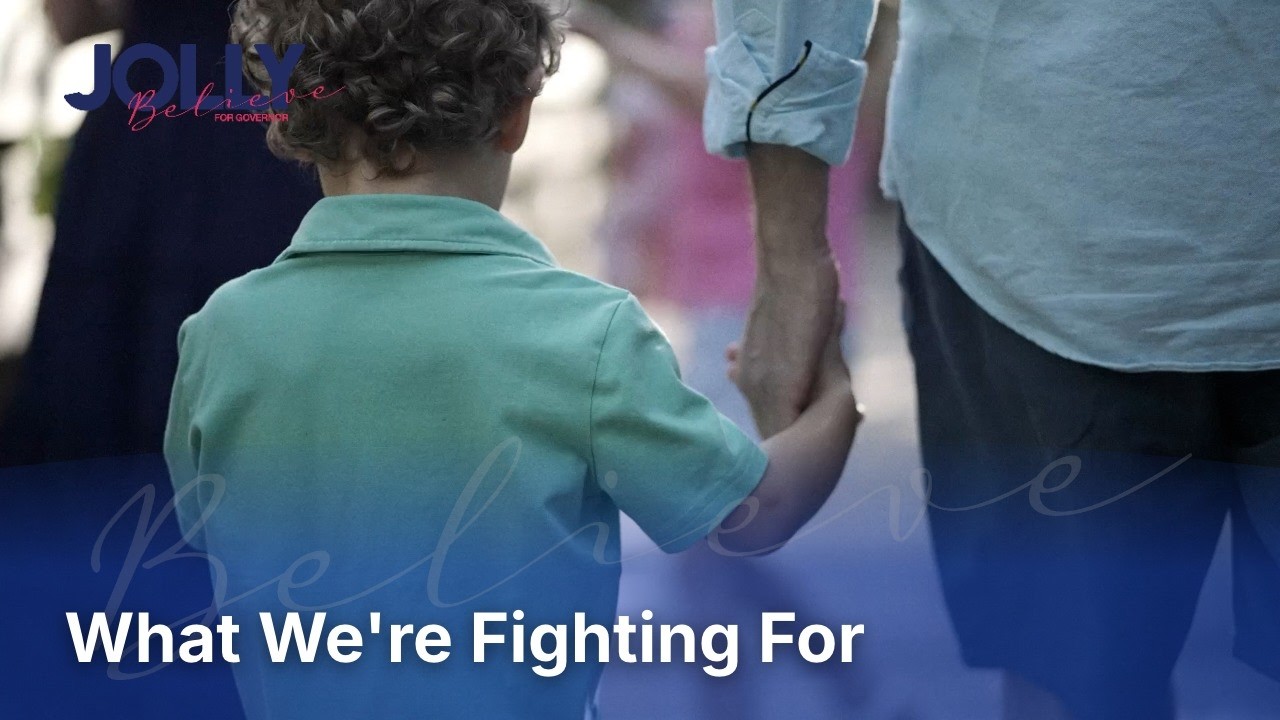
What We Are Fighting For. David and Laura Jolly on why Florida's coast is worth protecting.
Frequently asked questions
Q. Why oppose offshore drilling if it could create Florida jobs?
Offshore drilling in the Gulf creates very few Florida jobs because the rigs are based out of Louisiana and Texas ports, not Florida. What Florida loses in a Deepwater Horizon-scale spill, tourism revenue, fishing industry, real-estate value, ecological damage, runs to tens of billions of dollars. The 2010 spill of approximately 4 million barrels damaged Florida's Panhandle for years. Florida's tourism economy (about $130 billion) and ocean economy (about $30 billion) both depend on clean beaches and healthy water. The risk-reward math doesn't favor opening Florida waters to drilling: the potential losses are vastly larger than the potential gains.[1][2]
Q. What if I work in tourism?
Florida's tourism economy is the largest sector of the state economy: visitor spending exceeded $134 billion in 2024 and tourism supports roughly 1.8 million Florida jobs across hospitality, recreation, and related industries. Every red tide event, hurricane, beach erosion incident, and water-quality crisis directly suppresses visitor spending the next quarter. Florida's broader ocean economy contributes tens of billions in GDP annually and supports hundreds of thousands of jobs, with more recent FAU analysis putting the total impact in the range of $96 billion in GSP and 909,000 jobs in 2023. The argument for environmental protection in Florida is not philosophical, it is economic.[2][3]
Q. What if I am a commercial or recreational fisherman?
Florida's saltwater fishing economy generates approximately $9.2 billion in annual economic impact per FWC, with Florida leading the nation in number of saltwater anglers. The industry depends directly on healthy estuaries, coral reefs, and water quality, all of which are stressed by red tide (the 2017 to 2019 event cost an estimated $2.7 billion), Lake Okeechobee algal discharges, declining springs, and hurricane damage to coastal habitats. Environmental protection is direct economic protection for the fishing industry. David Jolly's framing of head-and-heart environmentalism speaks directly to fishermen who feel the impact every season.[7][8]
Q. What if I work in oil and gas in Florida?
Florida's oil and gas sector is very small, and almost no Florida workforce depends on offshore drilling, because Florida's state waters are constitutionally protected (Amendment 9, 2018) and the federal Eastern Gulf is under moratorium through 2032. Most Florida energy-sector employment is in utility generation, solar installation, and natural-gas distribution. The clean-energy transition is creating energy-sector jobs in Florida, with the IRA projected to create about 85,000 jobs by 2030, concentrated in solar, EV, and grid resilience. David Jolly's plan would accelerate that direction rather than reverse it.[5][6]
Q. What is Amendment 9 and what does it do?
Amendment 9, approved by Florida voters in 2018 with 69% support, banned offshore oil and gas drilling in Florida state waters (within 3 nautical miles of the Atlantic coast and 9 nautical miles of the Gulf coast). It is locked into the Florida Constitution and cannot be removed without another statewide referendum at 60% support. The amendment provides one layer of protection against offshore drilling expansion; the federal moratorium on the Eastern Gulf (currently set to expire 2032) provides the second.[5][6]
Q. What is U.S. offshore drilling policy?
The U.S. operates a Five-Year Offshore Oil and Gas Leasing Program managed by the Bureau of Ocean Energy Management (BOEM), which sets where and when offshore lease sales occur. The Eastern Gulf of Mexico is currently under a federal moratorium through June 30, 2032, extended by President Trump in September 2020. Most active U.S. offshore drilling is in the Central and Western Gulf of Mexico. Executive moratoriums are not binding on future presidents, so only Congressional action gives full legal protection.[6]
Q. Aren't climate and environmental policies just going to hurt the Florida economy?
The economic case actually runs the other way. Florida's tourism economy (about $134 billion in visitor spending, 1.8 million jobs), broader ocean economy (tens of billions in GDP and hundreds of thousands of jobs), and saltwater fishing industry ($9.2 billion in annual economic impact) all depend on a healthy environment. Every red tide event, hurricane, and water-quality crisis directly suppresses those numbers. Environmental protection in Florida is the economic protection of the state's largest industries, not a cost imposed against them. This is the basis for David Jolly's lead-with-your-head framing.[2][7]
Q. Why does an oil spill affect fishing so severely?
Florida's fishing industry depends directly on healthy estuaries, coral reefs, and water quality. A large oil spill contaminates those systems, killing fish and shellfish, closing fisheries, and suppressing the recreational angling economy for years. Florida leads the nation in the number of saltwater anglers and the saltwater fishing economy generates about $9.2 billion in annual economic impact. When water quality collapses, whether from a spill, red tide, or algal discharge, the economic damage is immediate and lasting.[7]
Q. How large was the Deepwater Horizon spill?
The 2010 Deepwater Horizon disaster spilled an estimated 3.2 to 4.9 million barrels of oil into the Gulf of Mexico over 87 days, the largest marine oil spill in U.S. history. Eleven workers were killed in the initial explosion. Florida's Panhandle beaches and fishing economies suffered direct economic and ecological damage from the spill plume, and the disaster became the historical backdrop for the federal moratorium on Eastern Gulf drilling and ongoing arguments against expanding offshore drilling near Florida.[1]
Sources
- NOAA, Deepwater Horizon Oil Spill, https://www.noaa.gov/deepwater-horizon-oil-spill · 2010-04-20
- Visit Florida Research, https://www.visitflorida.org/resources/research/ · 2024-01-01
- Florida Atlantic University, Florida Office of Ocean Economy, https://www.fau.edu/ocean-economy/economy-at-a-glance/ · 2024-01-01
- David Jolly, Offshore drilling protection (campaign video), https://www.youtube.com/watch?v=AIjFTGHBLxo · 2026-04-01
- Ballotpedia, Florida Amendment 9 (2018), https://ballotpedia.org/Florida_Amendment_9,_Ban_Offshore_Oil_and_Gas_Drilling_and_Ban_Vaping_in_Enclosed_Indoor_Workplaces_Amendment_(2018) · 2018-11-06
- Bureau of Ocean Energy Management, Oil and Gas Energy, https://www.boem.gov/oil-gas-energy · 2020-09-08
- Florida Fish and Wildlife Conservation Commission (FWC), https://myfwc.com/conservation/value/saltwater-fishing/ · 2024-01-01
- NOAA NCCOS, Economic Impact of Florida Red Tide, https://coastalscience.noaa.gov/news/total-economic-impact-of-2018-red-tide-now-estimated-at-2-7b/ · 2025-01-01
Once it's gone, you don't get it back
Florida has seen what a spill does. Protecting the coast is the right thing to do, and it protects the state's largest industries too. Have a question for David? Visit the Town Hall and ask.